One of the promises I made to myself when I left my job was that this time off wouldn’t only be about building and writing. It would also be about the stuff I’ve been putting off. The house stuff. The basement stuff. The “we’ll deal with that eventually” pile that every busy person accumulates like sediment.
We’re doing the basement this summer. Which means the tubs need to go through.
If you’ve been a tech person for any length of time, you know about the tubs. The large Rubbermaid bins, usually in some corner of the basement or on a shelf in the garage that contain the archaeological record of your career. Old laptops. Cables for things you no longer own. Hard drives. Power bricks that you cannot identify.
I spent part of today going through two of them.
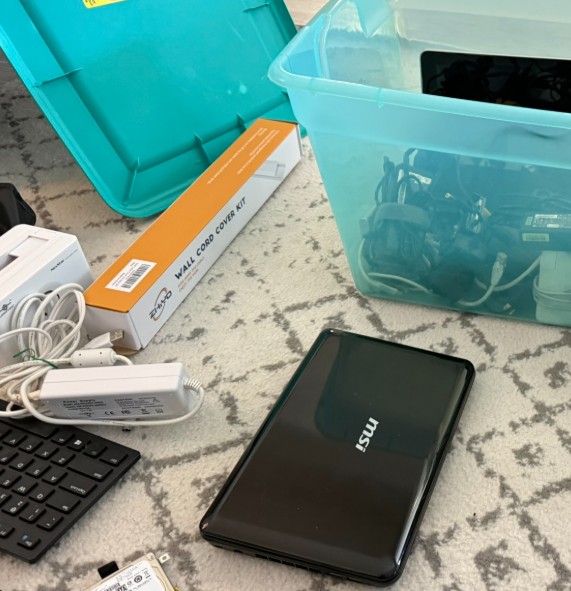
The MSI Wind
The first thing I pulled out that made me actually stop was this:
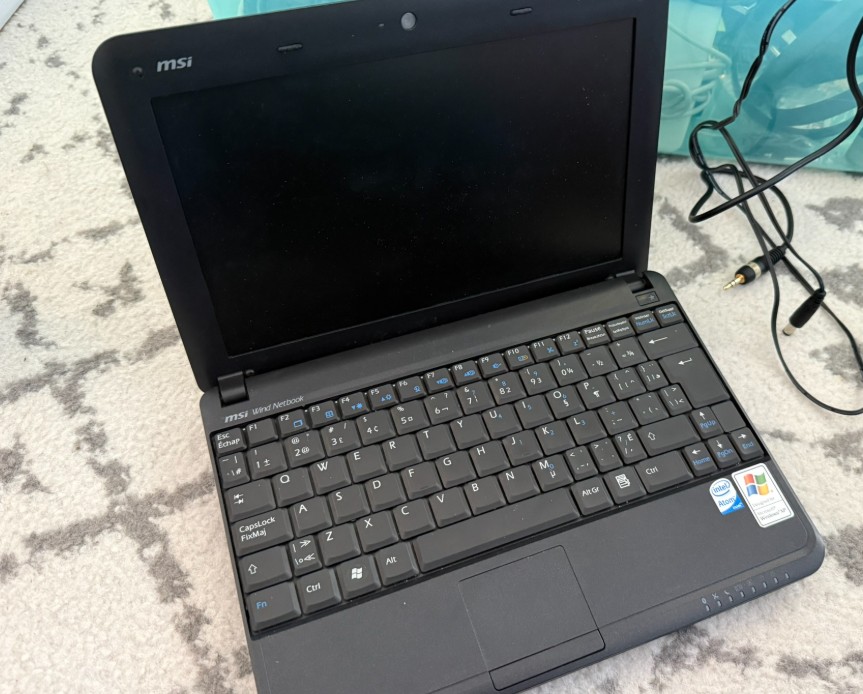
An MSI Wind netbook. If you’re under 30, you may not remember the netbook era, but for a few years in the late 2000s, these tiny underpowered laptops were everywhere. Cheap, small, slow. Just enough computing power to run a browser and not much else.
I turned mine into a Hackintosh.
For the uninitiated: a Hackintosh is a non-Apple computer that has been coaxed, through a combination of bootloaders, kernel extensions, driver patches, and sheer stubbornness, into running macOS. Technically against Apple’s Terms of Service. Required hours of forum-diving and troubleshooting things that made absolutely no sense. I loved every minute of it.
Why? Because I wanted to build an iOS app. And you needed a Mac to build iOS apps. And I didn’t have a Mac. So I made one out of a Windows netbook, like a reasonable person.
The app was called WOD Timer. “WOD” stands for Workout of the Day, Crossfit terminology. It was a Tabata interval timer. Tabata is a workout protocol: 20 seconds of intense effort, 10 seconds of rest, 8 rounds. The app played a beep sound at the right times. That was basically it.
I thought it was going to make me rich. Spoiler: it did not.
But I shipped it. I figured out Xcode. I figured out Objective-C (this was pre-Swift). I navigated the App Store submission process for the first time, which is its own special kind of bureaucratic adventure. And I shipped it. On a netbook running a hacked version of macOS on my kitchen table, probably while a toddler screamed somewhere nearby.
That matters to me more in retrospect than it did at the time.
I eventually upgraded to a MacBook Pro 2008, because the Hackintosh netbook, if I’m being honest, was not a great development machine, and used it to finish WOD Timer and build several more apps from there.
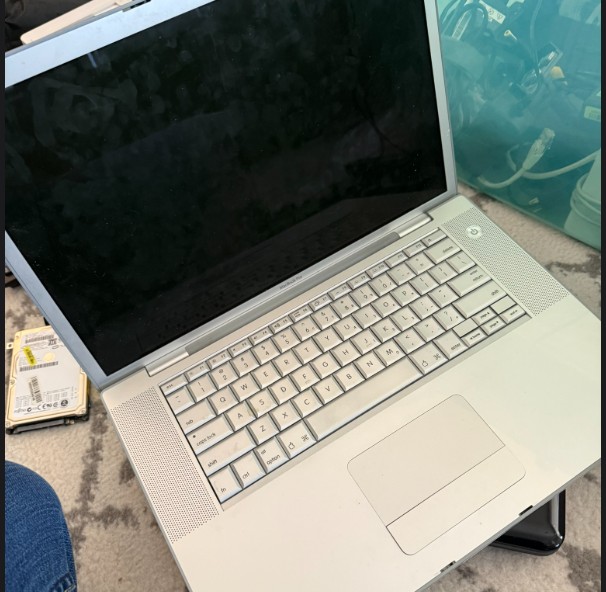
There they both are, pulled out of the same tub. Fifteen-ish years of dust between them. The MacBook Pro still looks surprisingly good in that sturdy aluminum shell, the one Apple made before they decided that thin trumped everything else. I have no idea if it turns on.
The Disks
Then there was this:
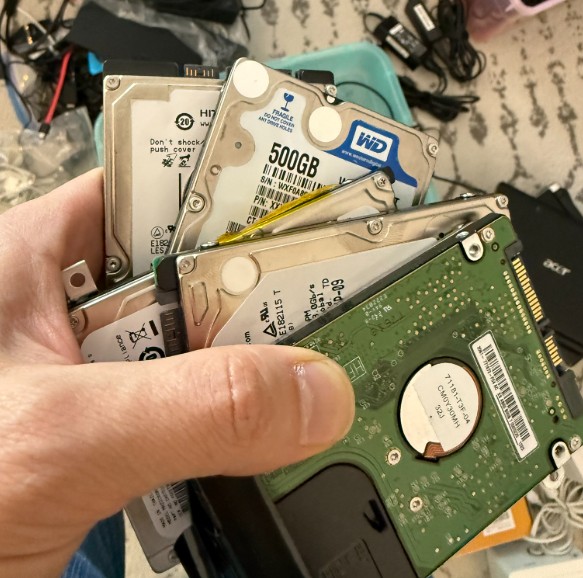
A fistful of 2.5" laptop hard drives. Five or six of them, pulled from various old machines over the years.
My first instinct was the obvious one: is any of this worth anything?
Hard drive prices are up. HDD prices have risen roughly 46% in just four months, with some models up as much as 60%. A drive that was $130 earlier this year is now $200 or more. Western Digital’s CEO recently said they’re “pretty much sold out for calendar 2026.” The same story is playing out with SSDs, enterprise-grade 30TB SSDs have more than doubled in price over the past year.
The cause? AI data centers. Every model needs training data. Every inference cluster needs fast, dense storage. Every hyperscaler is building out as fast as physically possible, and they’re hoovering up storage hardware before it even hits shelves. The same boom reshaping careers and industries is apparently also making it hard to buy a hard drive at a normal price.
So, should I sell these drives?
Nope. I should just copy, erase and destroy. Who knows what’s hiding on these things. Besides, the units that data centers are snapping up are massive enterprise drives, 16TB, 20TB, purpose-built for rack-scale infrastructure. A 500GB 2.5" laptop drive from 2011 is not what anyone’s AI cluster is waiting on. But I stood there for a moment holding a fistful of old laptop drives, and I appreciated the absurdity of it all.
I’m going to transfer what I can from these things and then they’re going to the e-waste place.
I’m not particularly sentimental about objects. But there’s something about going through these tubs… There’s a lot of time in there. The MSI Wind represents a version of me that had a full-time job, a growing family with a newborn, and still found the time, and the drive, and the stubbornness to learn a new platform, hack together a dev environment, and ship something into the world. That guy didn’t have a lot of bandwidth. He made it work anyway.
I don’t need the netbooks. I don’t need the 2008 era MacBook Pro. I don’t need the pile of 500GB drives that the AI data centers of the world have absolutely no use for. But sitting with them for a moment, and remembering that first build, that first App Store submission, the way it felt when WOD Timer actually appeared in the search results, was worth something.
The tubs are getting emptied. The basement is getting done. The stuff is going where stuff goes.
But I remembered. And that counts for something.