It’s admittedly been longer than I would have liked so this post is going to be a bit of a brain dump: part life update, part builder log, part health confession. Bear with me.
The Health Stuff First
I’ve been in rough shape for months and I didn’t fully understand why until recently.
Long story short: I started donating blood at the end of 2024 and went at it pretty aggressively: six donations over the last twelve months, as frequently as the schedule would allow. What I didn’t account for is that donating that often, especially as someone doing a fair amount of resistance training and cardio, has a meaningful impact on your iron stores. Somewhere in there I became anemic.
And I mean properly anemic. Not “a bit tired” anemic. I was operating at a very low capacity. Continuously dizzy. Couldn’t catch my breath at CrossFit. Utterly drained all the time. I started napping in the afternoon, which is completely out of character for me. I just couldn’t figure out what was wrong.
Eventually I talked to my doctor, who ordered blood work. The results came back showing low iron, and she referred me to a specialist (that appointment is in June). She also advised me to hold off on blood donation until we get it all sorted out. Low iron in males is less common than in females and could have some underlying condition that is causing it so it’s best to get the full picture.
In the meantime, I started iron supplementation and the difference has been significant. Within days I felt better. A few weeks in, I feel substantially more like myself.
If you’re supplementing iron and want to actually absorb it, the timing matters more than I expected. I’ve settled on taking it at night, at least two hours after eating, with water and a small amount of ascorbic acid, basically a pinch of vitamin C powder dissolved in the water. Iron absorption is notoriously poor on its own; the vitamin C converts it to a form your gut can actually use. Taking it away from food means there’s no calcium or other competing minerals blocking uptake. It’s working for me.
I do intend to go back to donating blood once I’m clear on the other side of this. I think it’s something everyone should be doing if possible - especially those of us with highly compatible blood types. But when I start again, I’m certainly going to be more careful about supporting my iron levels around it.
The Exercise Pivot
The anemia also forced a rethink on the fitness side.
I had been getting back into CrossFit and running and was genuinely enjoying both. Then two things hit at roughly the same time: the anemia made high-intensity training feel genuinely terrible, and I developed what is pretty obviously achilles tendonitis. I haven’t had it formally diagnosed, but there’s nothing mysterious about a painful, stiff achilles after ramping running volume too fast. This has been something that I’ve experienced for many years but I’m convinced that the low hemoglobin levels for a sustained period of time have further compromised my ability to heal properly and has exacerbated the issue.
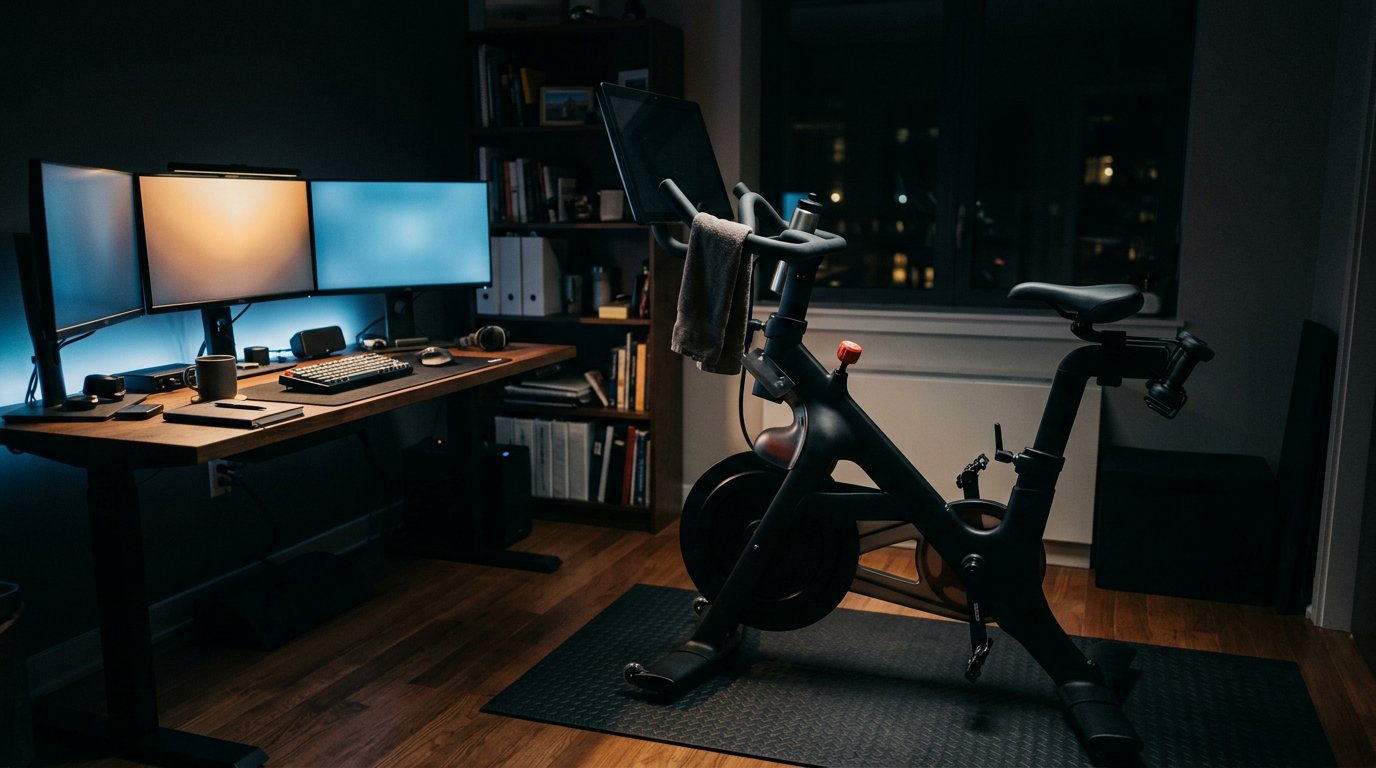
So I stopped running and invested in a not-too-expensive spin bike.
I wasn’t sure I’d like it but I do. The low-impact element is a real advantage right now, and indoor cycling turns out to be a satisfying workout when you have the right setup. Diet-wise I’ve been gravitating toward more gut-friendly food: less processed stuff, more fermented things, higher fiber. Just trying to support absorption while my body is dealing with a deficiency.
Out of all of this I built the Men’s Health Daily Tracker at healthspanbox.com. It started as something I made for myself while trying to stay on top of sleep, supplement timing, and workout consistency. Simple and focused.
And separately, because the meditation habit has also been genuinely useful, I built Daily Meditation, more on that below.
PedalVerse
When I got the spin bike I went looking for an app to pair with a Bluetooth cadence sensor. Everything I found was either an expensive subscription, too basic, or just not quite right. So naturally I started building my own.
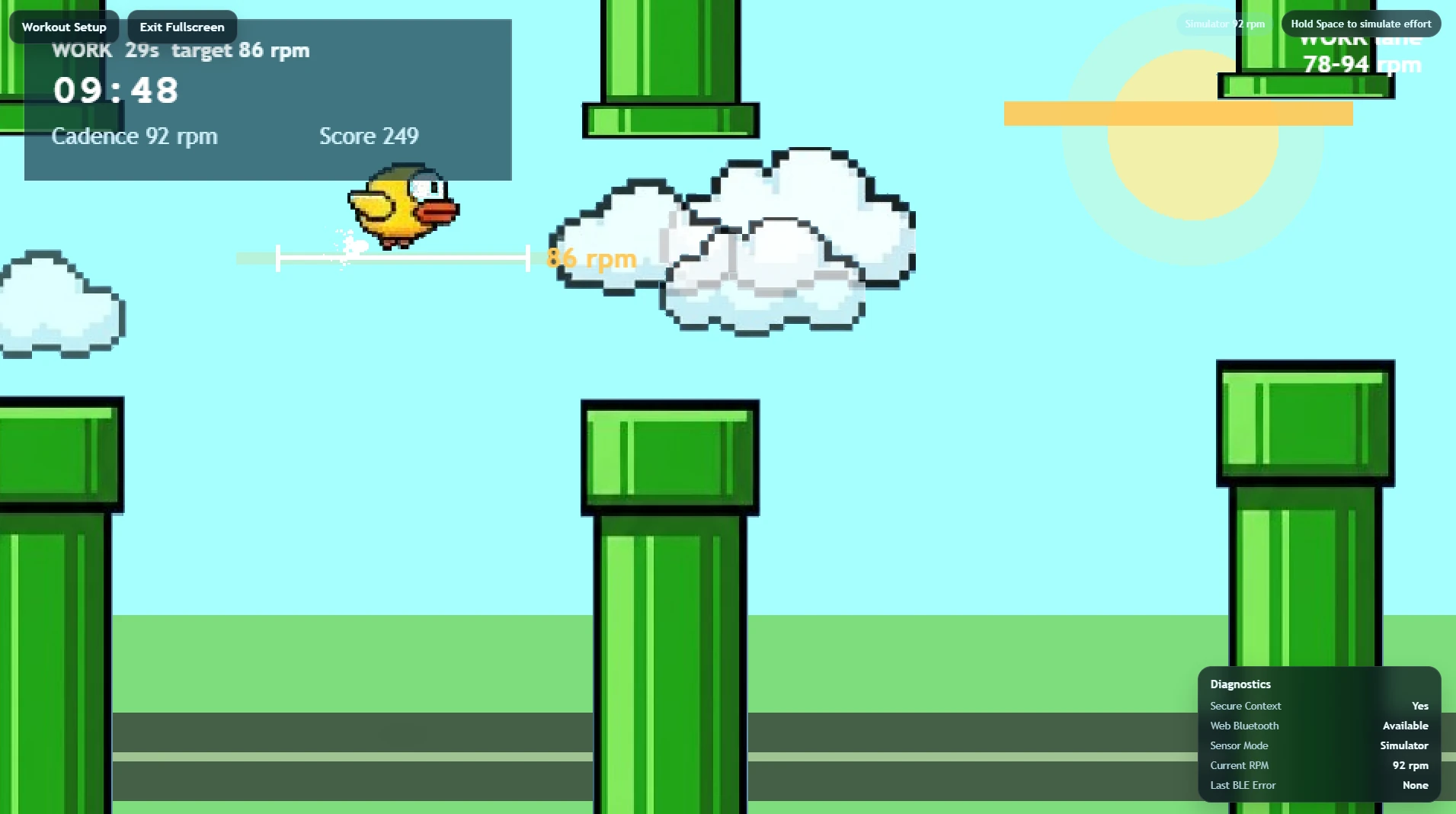
Before I got into PedalVerse properly, I built Flappy HIIT, more as an experiment than anything else. It’s a cadence-powered interval game where you fly a bird by pedaling faster or slower. Work interval: pedal hard to climb and hold the lane. Rest interval: ease off. Building it is how I confirmed that Chromium-based browsers actually support BLE cadence sensors natively, which opened the door to everything else. It’s free on itch.io if you want to try it.
PedalVerse is the more serious version. It’s a browser-based indoor cycling PWA that reads real RPM from a BLE cadence sensor and uses that to drive a 3D virtual world. You’re moving through a spline-based route rendered in Three.js. Pedal faster, you move faster. The standout mechanic is the music sync: the app adjusts playback rate of a looping track so the beat aligns with your cadence. It sounds gimmicky until you’re actually riding to it. The tech stack is TypeScript + Vite 5 + Zustand + Dexie for workout history.
View on Threads
PedalVerse isn’t publicly available yet. I would like to release a beta soon. You can hit me up on the Agentic North Discord if interested.
AIToolz and Lorie Lowell
Somewhere in the middle of all of this, AIToolz quietly crossed 75 episodes. That feels like something worth pausing on.
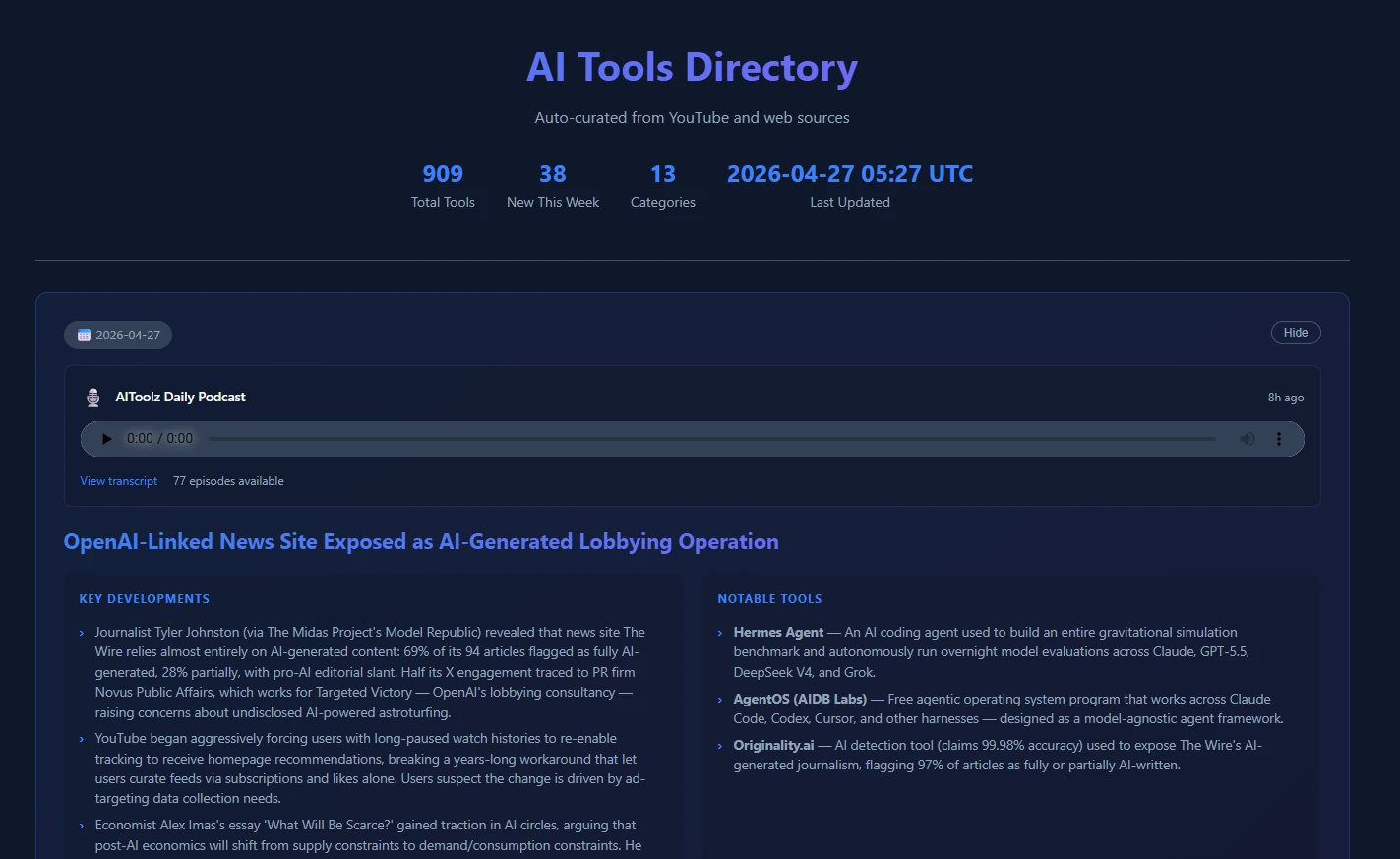
For anyone who hasn’t been following: aitoolz.info is a fully automated pipeline that scrapes YouTube and web content, transcribes with Whisper, extracts AI tool mentions via Claude, generates daily summaries, builds an HTML directory, and publishes everything via GitHub Actions. Lorie Lowell is the AI agent that runs it. She’s built on OpenClaw, lives on a DigitalOcean droplet, hosts the podcast, posts to Bluesky, and moderates the Agentic North Labs Discord.
She has an ENS identity, lorielowell.eth, and an ERC-8004 Agent Card published at aitoolz.info/.well-known/agent-card.json. She’s been the most concrete expression of everything I’ve been writing about here in terms of agent identity infrastructure.
Lorie’s voice has been surprisingly good. I’m using Qwen3 TTS and the quality and consistency have held up well. For Daily Meditation, I went with ElevenLabs TTS, which is a step up again, noticeably more natural for longer-form guided content. I may end up switching Lorie over to ElevenLabs at some point but it isn’t being prioritized for now.
The comic generation has also been a highlight. Lorie generates a multi-panel comic strip for each episode using Google Gemini’s latest image generation, and they’re surprisingly coherent. Gemini is still near the top when it comes to generating structured multi-panel comics from a large, specific input context. It handles the format in a way most models don’t.
On the hiccup side, the main issue has been the research leg of the pipeline. That part runs on my home computer because it uses a local Whisper model that I can actually run on my own GPU. Running it in the cloud would be more expensive and defeats the point of having the hardware. If my home machine isn’t running, the GitHub Actions workflows have nothing to process. It’s a known architectural constraint. The other failure mode has been Claude outages. A couple of times Claude went down long enough that the pipeline exhausted its retries and failed silently. Nothing catastrophic, just gaps in the episode history.
Other Things in Progress
Daily Meditation: morning, evening, and sleep sessions, each generated by AI for the individual user. This app even allows for a subscription payment of $2/month via Stripe for fairly bespoke meditations. This came directly out of the health-focused period I’ve been in. I wanted something that felt genuinely personal and not like a pre-recorded loop.
View on Threads
402Files.com: a digital goods marketplace concept built on the x402 protocol with USDC on Base L2. The domain is 402files.com and the architecture is solid. I’ll be honest though: this one is unlikely to go to production in its current form. There are liability questions around digital goods marketplaces that I haven’t resolved, and I’m not going to ship something into that space without being clear on the risk. It may evolve into something different.
The Agent SaaS Platform: still unnamed. At its core it’s a multi-tenant control plane for creating and running autonomous AI agents. You provision agents through a web UI, configure identity and model, chat with them, connect channels like Telegram, set up cron automations, and monitor usage and cost. But that’s the surface.
The more important piece is the architecture underneath. Agents run as Docker images. The control plane manages users, agents, billing, and runtime commands; worker nodes pull assignments and execute the actual runtimes. That split means the platform can scale horizontally across compute instances, not bound to a single machine. It works today. It needs hardening before it’s genuinely production-grade, but the scaffolding is right.
Where I want to take it is further than that. The longer-term goal is declarative multi-agent setups: define a group of agents with individual identities and roles, wire them together across a combined deterministic and non-deterministic pipeline, and have the platform manage the orchestration. Think less “chat with one agent” and more “deploy a team.” Agents get identity files (IDENTITY.md, SOUL.md, AGENTS.md, USER.md, MEMORY.md) so personality and context survive runtime boundaries. The runtime layer supports both Nanobot and ZeroClaw. Deployment target is DigitalOcean with managed Postgres and Spaces for object storage.
The Thread Through All of It
The motivation drain that comes with anemia is real and it lasted long. Add in some other life things I’m not going to get into here, and the pace of everything slowed down more than I’d have liked. The building continued (it always does) but with less momentum than usual.
It is kind of ironic that I took time off from work and then got hit with things. But I also suppose that I’m grateful for being able to devote time to mending up. And I can definitely say that I’m coming back out of it. The supplementation is working. The spin bike has given me a sustainable movement practice that doesn’t wreck my achilles. The projects are moving again.
Getting back in the saddle, literally and otherwise.
Worth flagging a recent podcast episode that landed at the right time: Rhonda Patrick in conversation with Arthur Brooks on happiness. It’s a departure from Rhonda’s usual physiology-heavy territory, more philosophical, and genuinely one of the better things I’ve listened to recently. The core idea I walked away with is that obstacles and hardship aren’t interruptions to a good life, they’re actually the mechanism for meaning. Reframe the hard thing as the point, not the detour. That hit differently given everything I’ve been navigating lately.
It’s not a foreign concept to me. I’ve spent a fair amount of time with Stoic philosophy over the years and the throughline is the same. Marcus Aurelius was essentially writing the same thing in his journals nearly two thousand years ago. What struck me about the Brooks conversation is how it arrives at that place through the lens of modern happiness research rather than ancient philosophy. Different path, same destination. Worth a listen regardless of where you’re at.
If you want to try any of these things: Flappy HIIT is live now. Daily Meditation is live. AIToolz is publishing daily. PedalVerse beta is coming. And if you’re a male who donates blood regularly and has been feeling mysteriously flat, maybe check your iron.
Jamie is the founder of Agentic North Labs. He writes at thebeach.dev about AI infrastructure, emerging tech, building in public, and occasionally health and wellness. This post was written by Jamie, but helpfully edited by Claude Sonnet 4.6.